
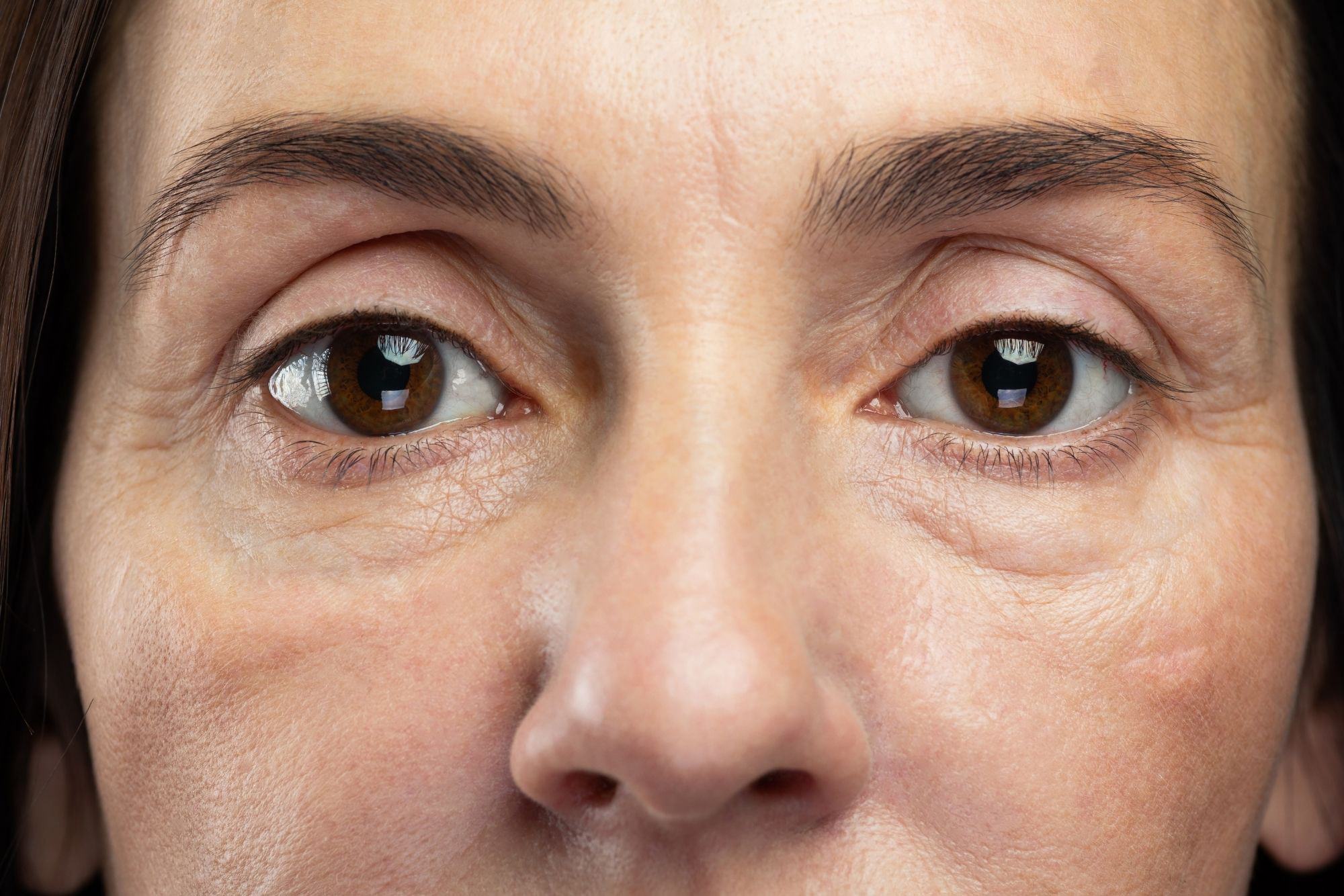
“Can You Prevent Hooded Eyelids and Other Signs of Ageing Around the Eyes?” is a collaborative post.
Changes around the eyes can alter the appearance of the entire face. Fine lines may become more visible, the upper lids can begin to look heavier, and puffiness or dark circles may persist even after a good night’s sleep. These changes are common with age, but the eye area’s unique anatomy means they often appear earlier than elsewhere.
Hooding, in particular, is not caused by a single process. Reduced skin elasticity and changes in the surrounding temples can affect the contour of the upper eyelids. Additionally, the skin around the eyes has fewer sebaceous glands, making it especially prone to dehydration and external stress. There is relatively little natural protection in this area, which can be affected by UV exposure, harsh ingredients, allergies, and lack of sleep.
Hormonal changes and declining elasticity add to this vulnerability. As collagen is lost, the skin looks less plump and resilient. Its reduced ability to spring back makes lines, crepiness, and sagging more noticeable. Everyday facial movements put additional strain on the area. Crow’s feet develop through repeated muscle contractions associated with smiling, squinting, and other expressions. Rubbing the eyes repeatedly stretches the skin, and the way eye make-up is applied may contribute to premature wrinkling if it involves frequent pulling or pressure.
Some changes are visual effects of thinning skin. Dark circles, for example, can become more noticeable as the skin grows increasingly translucent.
Hooding is when excess or lax tissue becomes more prominent over the upper eyelid. The eyelid itself might lose elasticity and contribute, but the facial structure around it is also important.
Expert opinion
Ophthalmic surgeon Dr Julia Sen says, “Loss of volume at the temples can cause upper lid redundancy and hooding.” This is an important consideration since eye care is often very limited to the area directly under or above the eye. In practice, the temples help support the overall shape and contour of the eye.
The lower lids can experience a different problem. According to Dr Sen, compromised lymphatic drainage may contribute to puffiness. This means that heaviness above the eye, swelling below it and fine lines around it may have different underlying influences, even when they appear at roughly the same stage of life.
Complete prevention may therefore be unrealistic. Ageing, facial movement, genetics and changes in volume cannot all be eliminated. A more practical objective is to reduce avoidable stress and support the quality of the skin before its fragility becomes especially visible.
Treat delicate skin as a separate skincare zone
A facial moisturiser isn’t automatically suitable for the eyelids. Ingredients tolerated elsewhere may be too aggressive for the thin, sensitive skin surrounding the eyes. An unsuitable formula can contribute to irritation, allergic reactions or milia.
A dedicated eye cream should address dryness without overwhelming the area. Depending on its formulation, it may also help improve the appearance of puffiness, sagging, fine lines or discolouration. The key is to select a product designed specifically for this sensitive location rather than assuming that a stronger formula will deliver better results.
The application deserves similar care. Pulling at the eyelids or rubbing products in vigorously adds unnecessary mechanical stress. The treatment area should also extend beyond the lids themselves when the aim is to maintain the wider eye contour.
Looking beyond the eyelids
Calecim Professional’s Eye Contour Lifting Cream is one example of a formula intended for the lids and temples. It contains the brand’s patented PTT-6® technology, which is derived from the cord lining of red deer and contains stem cell-secreted growth factors and exosomes, extracted ethically without harming animals.
Dr Sen recommends applying the cream across the eyelids and temples to support volume and skin quality. She attributes its effects to its combination of active ingredients, including PTT-6®.
According to Dr Sen, the formula can help reduce crepiness and translucency by thickening the epidermal and dermal layers of the skin around the eyelids and temples. She also says it can improve texture and elasticity by increasing collagen and elastin production, while better barrier function may help interrupt inflammation associated with pigmentation. Enhanced circulation is described as helping alleviate puffiness.
These actions are intended to produce smoother, firmer and more even-looking skin, with less visible sagging and dark circles. Applying the cream as far as the temples is particularly relevant when hooding is a concern, as this area contributes to the support and contour of the eyes.
Dr Sen uses Calecim Professional products within her practice as part of skincare and to enhance results following surgical and non-surgical procedures. She specifically recommends the Eye Contour Lifting Cream for ageing changes in what she describes as a highly sensitive and cosmetically important area.
Prevention is a combination of small decisions
No cream can stop facial movement, reverse genetic tendencies or prevent every structural change associated with age. Eye-area care is better understood as maintenance: limiting unnecessary irritation, protecting vulnerable skin and supporting it with an appropriately formulated product.
Lifestyle habits matter as well. Getting enough sleep and limiting alcohol intake can help keep the area around the eyes looking its best. Avoiding habitual rubbing and handling the eyelids gently may also reduce preventable stress.
Hooding and other visible changes around the eyes develop through several overlapping processes. Addressing the eyelids alone may miss part of the picture. A thoughtful routine should consider the full contour, including the temples, while respecting just how thin and reactive this skin can be. The aim isn’t to make the eye area ageless, but to help it remain stronger, smoother and better supported as it changes.





Comments are closed.