“Whistock Teeth Whitening Powder – How I Brightened My Smile After Pregnancy” is a collaborative post.
Pregnancy changes your body in so many ways, some expected and others rather surprising. We often hear about changes to our skin, hair and hormones, but one thing that receives considerably less attention is how pregnancy can affect our oral health.
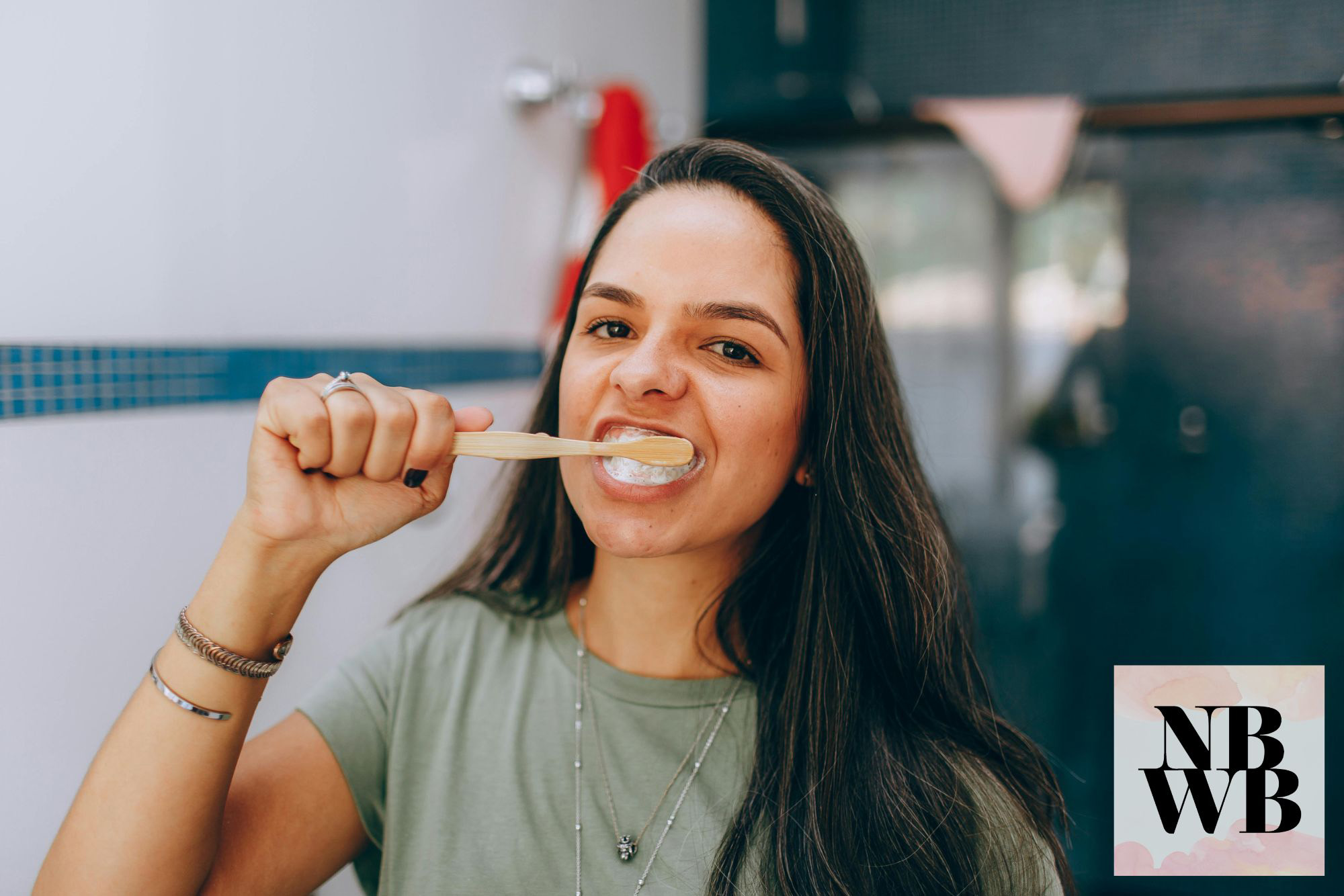
For me, one of the changes I became more conscious of was the appearance of my smile.
My teeth seemed to have lost some of their natural brightness, and I started noticing a slightly more yellow appearance than I remembered.
Like many mums, I had spent so much time focusing on my baby and adjusting to a new routine that my own beauty and self-care habits had taken a back seat.
Eventually, I decided to look into ways of improving the appearance of my teeth. However, there was one thing I wanted to avoid: the sensitivity I associated with traditional hydrogen peroxide whitening treatments.
That led me to explore a different approach to teeth whitening, including a relatively new ingredient called PAP and an oral-care brand called Whistock.
Why Can Teeth Look More Yellow After Pregnancy?
Pregnancy can affect oral health in several ways, although it is important to understand that pregnancy itself does not automatically cause teeth to become yellow or permanently weaken enamel.
During pregnancy, hormonal changes can make gums more susceptible to inflammation. Morning sickness and acid reflux can also expose teeth to stomach acids, potentially contributing to enamel erosion.
This is particularly important because tooth enamel is the protective outer layer of our teeth.
When enamel becomes thinner, the naturally yellowish dentine underneath may become more visible, making teeth appear darker or more yellow.
Changes in eating habits, frequent snacking and disruptions to normal brushing routines can also contribute to plaque accumulation and surface staining.
Maintaining good nutrition, including adequate calcium and vitamin D intake, is important for overall health during pregnancy and breastfeeding.
For anyone noticing significant changes to their teeth after pregnancy, a dental examination is always a sensible first step.
Why I Wanted to Avoid Hydrogen Peroxide
Hydrogen peroxide has been widely used in professional and at-home teeth whitening treatments for many years.
It can be effective at breaking down compounds responsible for tooth discolouration, but temporary tooth sensitivity is a recognised side effect.
Having sensitive teeth can make everyday activities surprisingly uncomfortable. Even drinking something cold can become unpleasant.
For that reason, I was particularly interested in finding out whether there were whitening ingredients that worked differently from conventional peroxide-based treatments.
During my research, I came across PAP, which stands for Phthalimidoperoxycaproic Acid.
PAP is an alternative whitening ingredient that does not rely on hydrogen peroxide. It works through an oxidation process that can help break down certain stain molecules.
Some laboratory research has reported promising whitening results with PAP and comparatively limited changes to enamel surfaces under specific experimental conditions.
However, that doesn’t mean every PAP product is automatically suitable for sensitive teeth or that sensitivity is impossible.
The complete formulation, concentration and method of use all matter.
Discovering Whistock Teeth Whitening Powder
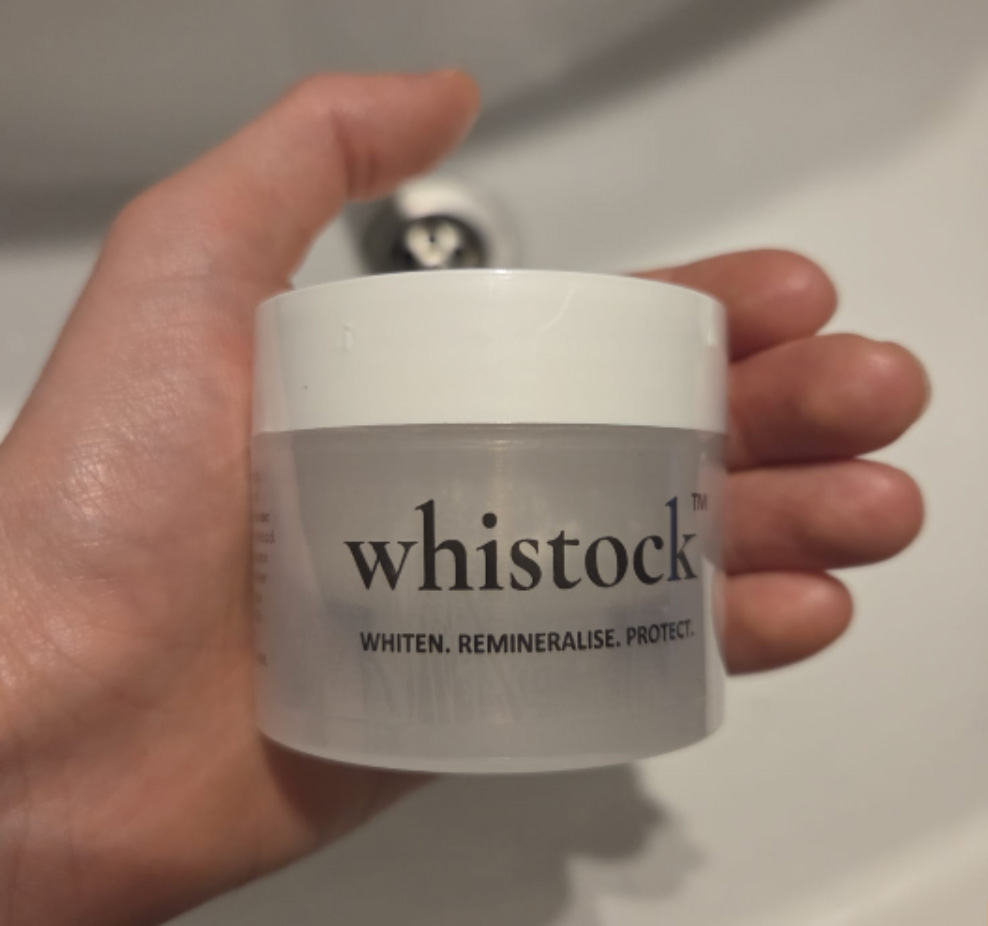
While researching PAP-based whitening products, I came across Whistock Teeth Whitening Powder.
Whistock is an oral-care brand established in 2026, with a focus on combining teeth whitening ingredients with components commonly used in modern oral-care formulations.
What initially caught my attention was that its powder contains more than just a whitening ingredient.
The formula combines four ingredients:
- PAP+ – A hydrogen peroxide-free whitening ingredient designed to help break down tooth stains.
- Hydroxyapatite – A mineral also found naturally in tooth enamel, studied for its potential to support enamel remineralisation.
- Zinc Citrate – An oral-care ingredient used to help control plaque and support oral hygiene.
- Calcium Carbonate – A mineral commonly used in toothpaste and polishing formulations to help remove surface stains.
I found the combination particularly interesting because I wasn’t simply looking for whiter teeth.
I wanted to understand how whitening could fit into a routine that also prioritised enamel care and everyday oral hygiene.
Hydroxyapatite – Why This Mineral Matters for Tooth Enamel
One of the most interesting ingredients in the Whistock formula is hydroxyapatite.
Although the name sounds rather scientific, hydroxyapatite is actually the main mineral component of our natural tooth enamel.
Enamel is highly mineralised, giving it the hardness needed to withstand everyday biting and chewing.
However, enamel is not living tissue and cannot regenerate in the same way that skin or bone can heal.
What it can do, under suitable conditions, is undergo remineralisation.
This is the process through which minerals are redeposited into areas of early mineral loss.
Hydroxyapatite has attracted considerable interest in dental research because it is chemically similar to the mineral naturally present in teeth.
Studies of hydroxyapatite-containing oral-care products suggest that appropriately formulated products may help support remineralisation and reduce tooth sensitivity.
Zinc Citrate – An Ingredient for Everyday Oral Hygiene
Another ingredient that caught my attention was zinc citrate.
Unlike PAP, zinc citrate isn’t primarily included to whiten teeth.
Instead, zinc compounds have been studied for their role in oral hygiene, particularly in helping to control plaque and bacterial activity.
Dental plaque is a sticky biofilm that continuously develops on the surfaces of our teeth.
If it isn’t removed effectively through brushing and interdental cleaning, plaque can contribute to tooth decay and gum inflammation.
Zinc citrate is used in some oral-care formulations because zinc ions can help inhibit certain bacterial processes associated with plaque formation.
Zinc compounds may also help reduce some of the volatile sulphur compounds associated with unpleasant breath.
How Does Whistock Powder Fit Into a Daily Routine?
One of the things that makes Whistock different from traditional whitening strips or trays is its powder format.
Instead of requiring a separate whitening session, the powder is designed to be used alongside regular toothpaste.
The recommended method is straightforward:
- Apply your usual toothpaste to your toothbrush.
- Lightly dip the toothpaste-covered bristles into Whistock Powder.
- Brush gently for approximately three minutes.
- Rinse thoroughly afterwards.
The brand recommends using the powder once daily for the first two weeks, followed by two to four times per week for maintenance.
I can see why this approach might appeal to busy parents.
Finding time for an elaborate beauty routine isn’t always easy when you’re looking after children, so products that fit into existing habits can be particularly convenient.
It’s worth remembering that whitening powder should complement, rather than replace, regular brushing with fluoride toothpaste and routine dental check-ups.
Can Teeth Whitening and Enamel Care Go Together?
One of the biggest lessons I took away from researching teeth whitening is that a brighter smile and healthy teeth shouldn’t be treated as separate goals.
Whitening products can improve the appearance of discolouration, but they don’t replace the basic habits that protect our teeth.
Good oral hygiene, appropriate fluoride exposure, a balanced diet and regular dental visits remain essential.
I also think it’s helpful to understand that not all discolouration is the same.
Surface stains from tea, coffee and certain foods may respond to polishing ingredients, while deeper discolouration can require a different approach.
Similarly, teeth that appear more yellow because of enamel erosion may need professional assessment rather than cosmetic whitening.
For me, the appeal of a product such as Whistock is the combination of a PAP-based whitening ingredient with hydroxyapatite and zinc citrate.
It represents an approach that considers both cosmetic appearance and ingredients associated with broader oral-care benefits.
My Final Thoughts on Post-Pregnancy Teeth Whitening
Pregnancy and motherhood can change the way we think about self-care.
Sometimes it’s the smallest things, such as feeling more comfortable with our smile, that encourage us to make a little time for ourselves again.
If your teeth seem more yellow after pregnancy, it’s worth understanding why before reaching for a whitening product.
Surface stains, changes in enamel and dental erosion are different issues, and the right approach depends on the cause.
For anyone curious about whitening alternatives, PAP-based formulations are an interesting area to explore.
I particularly like the concept behind Whistock’s combination of PAP+, hydroxyapatite, zinc citrate and calcium carbonate, because each ingredient has a distinct purpose.
Whitening is only one part of looking after your smile.
Keeping your teeth healthy, comfortable and well cared for matters just as much as their colour.
You can learn more about the formula, ingredients and referenced research on the official Whistock website.





Comments are closed.