

“Teaching Money Skills At Every Stage Of Childhood” is a collaborative post.
Financial education is an important part of raising capable, independent children. In a holistic parenting approach, money lessons are connected to responsibility, gratitude, thoughtful decision-making, and long-term well-being. Rather than focusing only on saving or spending, families can help children develop healthy habits that support balanced financial choices throughout life.
Early Childhood: Build Simple Money Awareness
Young children learn best through everyday experiences. Counting coins, helping pay at the grocery store, or placing money into separate jars for saving and spending introduces basic financial concepts in a way they can understand.
Parents can also explain the difference between needs and wants during routine shopping trips. These conversations encourage thoughtful choices instead of impulse buying while helping children recognize that resources are limited.
Elementary Years: Practice Planning
As children grow, they are ready to participate in simple financial decisions. An allowance tied to age-appropriate responsibilities gives them opportunities to manage money independently.
Setting savings goals for a toy, book, or special outing teaches patience and delayed gratification. Children also benefit from comparing prices, looking for discounts, and discussing why one purchase may provide greater value than another.
Parents should allow children to make small financial mistakes. Learning from those experiences builds confidence and better judgment over time.
Teen Years: Prepare for Financial Independence
Teenagers can begin learning about larger financial responsibilities that they will soon encounter as adults. Topics such as budgeting, banking, taxes, credit scores, and emergency savings become increasingly relevant.
Part-time jobs provide valuable opportunities to discuss paychecks, deductions, and long-term savings. Encouraging teens to set financial goals for education, transportation, or future living expenses helps connect daily decisions with larger objectives.
Families with significant long-term planning needs may occasionally introduce older teens to conversations involving a wealth management firm to demonstrate how professional guidance can support complex financial planning later in life.
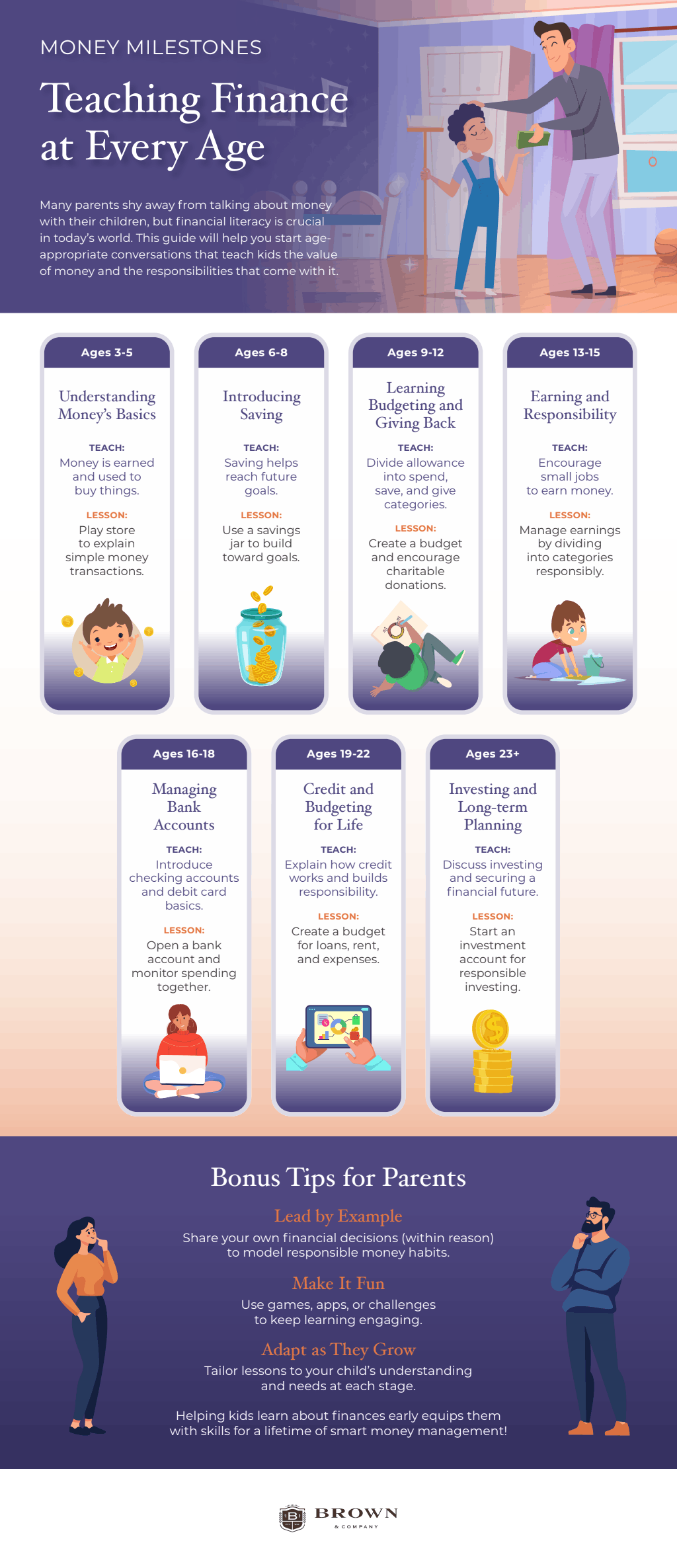
A holistic approach encourages children to see finances as one part of overall well-being. When parents model responsible financial behavior and include children in age-appropriate conversations, they help build practical skills, confidence, and decision-making abilities that can support financial stability throughout adulthood. Look over the infographic below to learn more.






Comments are closed.