

“Why Mental Arithmetic is More Than Just Fast Math” is a collaborative post.
The evolution of mental fitness has moved far beyond simple puzzles or crosswords. Today, parents and educators look for systems that actually rewire how a brain processes information, focusing on speed and multi-tasking rather than rote memorization. If you are exploring modern cognitive development tools for children, you can find specialized programs here that blend traditional abacus techniques with digital gamification. This approach doesn’t just teach a child to count; it builds a foundation for logical thinking that lasts a lifetime.
Why Mental Arithmetic is More Than Just Fast Math
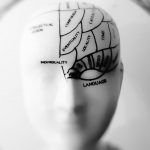
Most people assume mental arithmetic is a party trick designed to make kids calculate faster than a smartphone. That is a narrow view. When a student visualizes an abacus (soroban) to perform complex calculations, they engage both hemispheres of the brain simultaneously. The left hemisphere handles the logic and numbers, while the right hemisphere manages the visual image of the beads.
This bilateral stimulation creates new neural pathways. It improves concentration because a single slip in focus means the mental “image” of the abacus collapses. We see children who previously struggled to sit still for ten minutes suddenly finding the flow state required to solve thirty problems in a row. It is about building the “mental muscle” of attention.
Breaking the Cycle of Math Anxiety
Traditional schooling often turns mathematics into a source of stress. The pressure to get the right answer through rigid formulas can shut down a child’s desire to learn. Mental arithmetic flips this script. By turning numbers into a tactile, visual game, it removes the abstract fear.
Students gain a sense of mastery early on. When a seven-year-old realizes they can outperform an adult with a calculator, their self-esteem skyrockets. This confidence isn’t contained within math class; it spills over into public speaking, sports, and social interactions. They stop saying “I can’t do this” and start asking “How does this work?”
Practical Benefits of Cognitive Training
- Enhanced Photographic Memory: Kids learn to take mental snapshots of data, making it easier to recall facts for other subjects like history or biology.
- Split-Second Decision Making: The speed required in these programs trains the brain to process variables and reach conclusions faster than average.
- Auditory Processing: Many exercises involve listening to a string of numbers dictated at high speed, which sharpens verbal comprehension.
Moving Beyond the Classroom Walls
The real value of high-speed cognitive training shows up in everyday life. We aren’t just raising human calculators. We are developing individuals who can look at a complex problem, break it down into manageable parts, and execute a solution without second-guessing themselves.
Modern platforms have moved away from boring drills. They use augmented reality and interactive platforms to keep kids engaged. It turns out that when you make the process look like a video game, children will practice for hours without being told. We see better results when the technology supports the teacher instead of replacing them.
Consistency matters more than intensity. A child practicing for fifteen minutes a day will see more structural brain changes than one who crams for three hours once a week. It’s about creating a habit of mental agility. By the time these students reach university or enter the workforce, they already possess the cognitive stamina that their peers are only just beginning to develop. Investing in these skills early provides a competitive edge that no textbook can offer.





Comments are closed.