
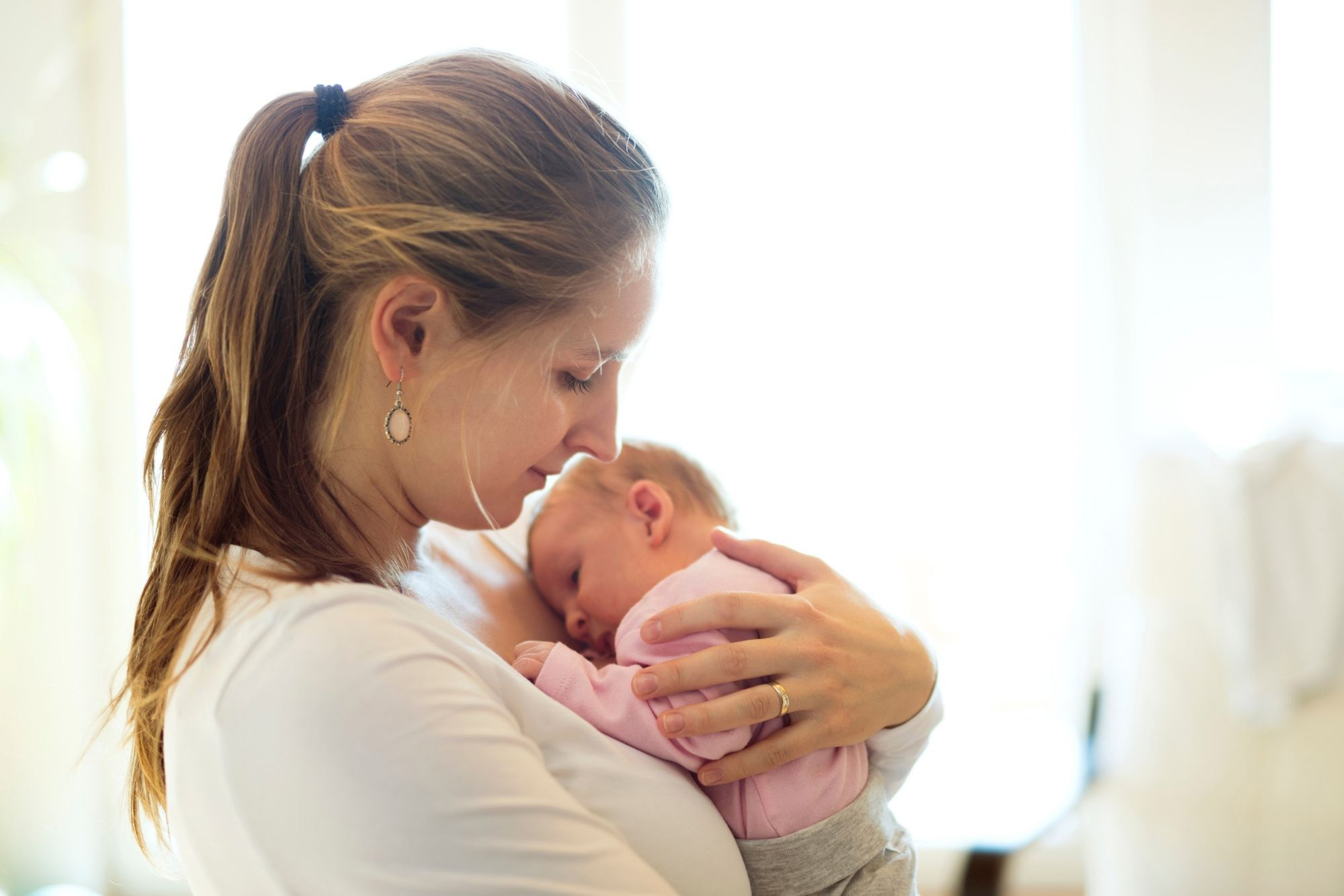
“Postpartum Hair Shedding: What’s Normal, What Isn’t, And When To Get Checked” is a collaborative post.
Hair shedding after a baby tends to arrive around month three, and it looks worse than it is. The American Academy of Dermatology (AAD) names the condition telogen effluvium and is direct about what it means: excessive shedding, not true hair loss. Most women are back to their normal fullness by their child’s first birthday.
The part that gets skipped is the other possibility. Postpartum shedding is common enough to be waved off by everyone, including the person losing the hair, and sometimes what looks like ordinary shedding is two or three things at once. Telling them apart decides whether you wait or get blood tests done.
Why does hair shed so heavily after birth?
Each follicle spends years in a growth phase, then a short resting phase, then releases the hair and restarts. Pregnancy raises estrogen, which holds hairs in the growth phase past the point they would normally exit. Hair gets thicker through the second and third trimesters. Nothing is being added. Shedding is being postponed.
After delivery, estrogen drops. A large group of follicles that should have cycled out across nine months moves into the resting phase at once. That phase runs about three months, which is why the shedding shows up in month three instead of week one. The hair coming out in month four was scheduled to fall in month one.
What does the normal timeline look like?
| Stage | What the sources say |
|---|---|
| Shedding starts | About three months postpartum (Cleveland Clinic, Johns Hopkins) |
| Peak shedding | About four months (AAD) |
| Shedding stops | Six to 12 months (Johns Hopkins). Cleveland Clinic gives up to six months |
| Fullness returns | By the child’s first birthday for most women (AAD) |
A 2023 questionnaire study in the International Journal of Women’s Dermatology put numbers on the curve. Of 331 women who delivered at 2 Japanese hospitals and answered 10 to 18 months later, 304 reported hair loss. In that group, shedding began at an average of 2.9 months, peaked at 5.1 months and ended at 8.1 months. The paper flags a sampling limit: women who had hair loss were more likely to answer. Up to 100 hairs a day is normal turnover. Postpartum shedding runs above that.
When is it not only postpartum shedding?
A 2024 cross-sectional study at Al-Azhar University Hospital in Cairo examined 200 women who came in with postpartum shedding, assessed six to eight weeks after delivery. Only 9.5% had telogen effluvium by itself. 84% also had female pattern hair loss and 34.5% also had traction alopecia, with 28% carrying all three diagnoses at once.
These were women concerned enough to see a dermatologist, so the rates run higher than across all new mothers. The pattern holds anyway: postpartum shedding pulls back the curtain on hair loss already moving quietly.
Female pattern hair loss
Thinning at the part and the top of the scalp rather than spread evenly. The part looks wider in photos before it looks wider in the mirror. Shedding that recovers everywhere except the part line is the signal.
Traction alopecia
Tension damage from tight buns, ponytails, braids and clip-in extensions. It shows up at the hairline and temples, reverses early, and stops reversing once follicles scar. New mothers tie their hair back more, which is why this one hides inside a postpartum diagnosis.
Thyroid
Postpartum thyroiditis affects an estimated 5% to 10% of women in the year after a birth. The overactive phase comes first, one to four months after delivery per the American Thyroid Association and up to six months per Cleveland Clinic, which lists hair loss among its symptoms. The underactive phase lands four to eight months out and can persist for a year. TSH and free T4 start the workup, and thyroid antibody testing is what separates postpartum thyroiditis from Graves disease, which is treated differently.
Iron
Ask for ferritin, not hemoglobin alone, because hemoglobin can sit inside the reference range while iron stores are low. There is no agreed cutoff for hair. A 2002 review recommended a serum ferritin above 70 µg/L in women who are shedding, while a 2008 study of 181 women found no association between hair loss activity and levels above 10 µg/L. Neither population was postpartum. Get the number and discuss it with your clinician, not a lab reference range.
What helps while you wait?
The AAD’s product advice is unglamorous and it works. Use a volumizing shampoo, because the protein in it coats the hair and adds apparent thickness. Switch to a lighter conditioner made for fine hair and put it on the ends, not the scalp. Skip intensive conditioners, which weigh hair down. A shorter cut reads as fuller. Handle hair gently and give tight styles a rest.
On supplements: they correct a deficiency and do nothing for shedding that is hormonal in origin. One warning if blood tests are coming. Biotin at the doses hair supplements use, commonly 5,000 or 10,000 micrograms a serving, can distort immunoassay results, and the exact threshold varies by assay. Inform the person who draws your blood what you take, and ask whether to pause it.
Which treatments are worth considering, and when?
Topical minoxidil: The NIH Drugs and Lactation Database calls maternal topical minoxidil acceptable once breastfeeding is established, with one caution: keep the infant off treated skin, because minoxidil can be absorbed and cause excess hair growth. One premature breastfed infant developed facial hypertrichosis while the mother used 5% topical twice a day, though causation was not established. A WHO database review counted 45 reports of infant hypertrichosis attributed to minoxidil. Oral minoxidil carries a stronger caution at high maternal doses or with a newborn.
Platelet injections: A 2025 systematic review in Dermatology and Therapy covered 43 randomized trials and 1,877 patients. It found moderate evidence that platelet-rich plasma raises hair density and reduces hair loss, with no significant effect on hair thickness. Three limits. About 73% of those patients were men. Most trials studied pattern hair loss, not postpartum shedding. And the evidence sits with PRP specifically, so ask any clinic offering PRF for hair which trials they are relying on and whether those trials used PRF or PRP. Neither has lactation safety data, which matters if you are still nursing.
Timing: Postpartum shedding resolves on its own in most cases, so injections started in month four pay for something the calendar was going to deliver anyway.
How to make the appointment count
Cleveland Clinic says talk to a provider if you are still losing hair at six months, because that is when iron and thyroid come into question. The AAD says see a dermatologist if fullness has not returned at 12 months, because pattern hair loss is then the likelier explanation. Use the earlier one.
Bring: Three photos in the same light: part line, crown, hairline. The dates shedding started, peaked and slowed. Family history of hair loss on either side. Your medications and supplements. Whether you are still nursing, since that changes what can be prescribed.
Ask for: a full blood count, ferritin, TSH, free T4 and thyroid antibodies, and vitamin D.
If shedding is still running at six months, or the thinning sits at the part instead of spreading across the scalp, book the appointment rather than trying another product. A provider who does medical hair restoration starts with the diagnosis and works back to the treatment.
FAQs
Does breastfeeding for longer make it worse?
The 2023 Japanese study found an association. Against women who stopped within six months, those who breastfed six to 12 months had 5.96 times the adjusted odds of postpartum hair loss (95% CI 1.68 to 21.09), and those who fed past 12 months had 6.37 times the odds (95% CI 1.95 to 20.76). Those intervals are wide, so the direction is clearer than the size. Not a reason to stop nursing.
Will biotin or hair gummies fix it?
Not if your levels are already adequate, and they complicate blood work at the doses most of them use. Correct a confirmed deficiency and treat the rest as optional.
Can I use minoxidil while breastfeeding?
Topical is considered acceptable once feeding is established, provided the baby does not contact treated skin. With a newborn against your head and shoulders that is harder to guarantee than it sounds, so raise it with your clinician.
When should I stop waiting and see someone?
At six months of continued shedding, per Cleveland Clinic. Go earlier if you see a widening part, thinning at the temples, or fatigue, palpitations and weight changes alongside the shedding.






Comments are closed.