

Dietary supplements are easy to buy and often marketed as simple ways to support health. Vitamins, minerals, herbs, probiotics, and other products can have legitimate uses, but being available without a prescription does not automatically make a supplement appropriate for every adult or child. Parents need to consider the ingredient, dose, product quality, and individual health needs before adding a supplement to the family’s routine.
Supplements Are Regulated Differently From Drugs
In the United States, the Food and Drug Administration regulates dietary supplements as food rather than approving them like medications before they reach consumers. Manufacturers are generally responsible for making sure their products are safe and properly labeled.
That distinction matters because supplements can contain biologically active ingredients. Taking excessive amounts of certain nutrients can cause harmful effects, and some supplements can interact with prescription or over-the-counter medications.
Children require particular caution because an adult serving size may be inappropriate for a smaller body. A pediatrician can help determine whether supplementation is necessary and what dose is suitable.
Quality Can Vary Between Products
A label tells consumers what a supplement is supposed to contain, but manufacturing quality also matters. Contamination with microorganisms, unintended substances, or incorrect ingredient levels can create additional risks.
Manufacturers may use controls such as raw-material evaluation and a microbiology testing service as part of their efforts to assess product quality. Consumers, however, usually cannot evaluate manufacturing conditions from the bottle alone.
Independent certification from organizations such as USP or NSF can provide additional information about whether a product has been tested against specific quality standards. Certification does not mean a supplement will provide a particular health benefit.
More Is Not Always Better
High doses can turn familiar nutrients into a problem. Fat-soluble vitamins such as A and D can accumulate in the body, while excessive iron can be particularly dangerous for young children.
Parents should also consider the combined intake from multiple sources. A child taking a multivitamin, fortified foods, and an additional nutrient supplement could consume more of an ingredient than expected.
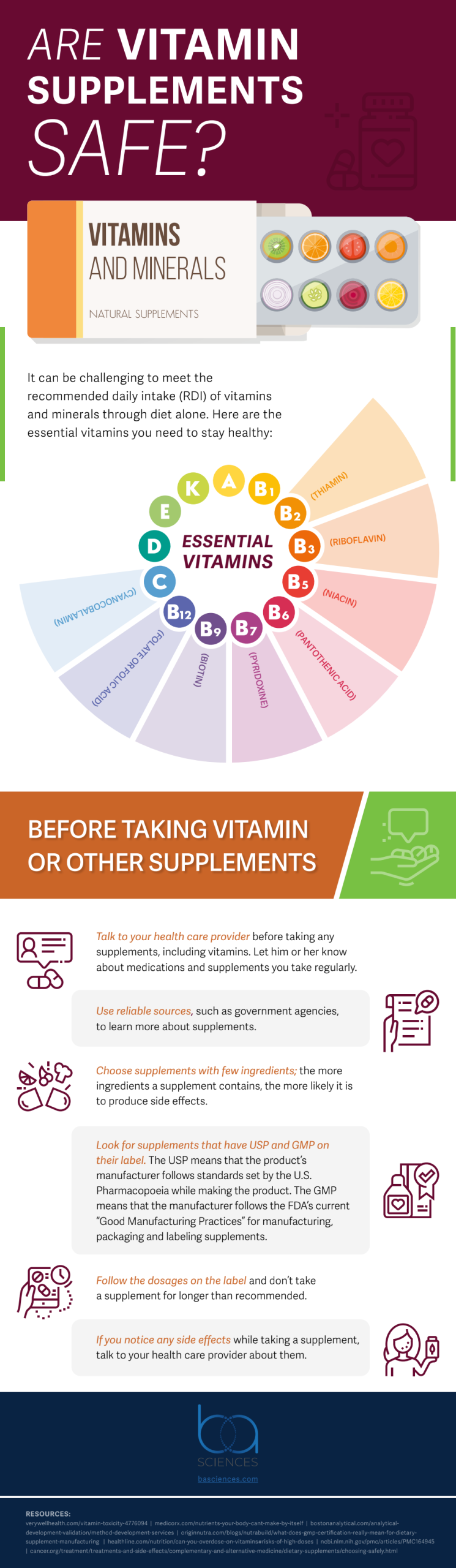
Dietary supplements can have a place in family health, especially when a healthcare professional identifies a nutritional need or recommends a specific product. Safety depends on more than whether an ingredient is described as natural. Look over the infographic below to learn more.






Comments are closed.